When You’re Ready for Change but Not Sure Where to Start, From a Therapist in Wakefield
The uncomfortable space between readiness and action

A therapist in Wakefield can help you find realistic steps to start if you have been feeling stuck
There is a particular kind of stuckness that shows up in capable, ambitious adults. You know something needs to shift. You have thought about it thoroughly. You may even have a clear idea of what you want. And yet, you are not starting.
This is not apathy. It is not a lack of intelligence or discipline. Often, it is not even a lack of time. Yet it’s easy to blame it on incompetence, laziness, or failure.
By mid-March, many people feel this tension more acutely. The new year energy has worn off. Winter has lingered longer than anyone would prefer. You may feel mentally prepared for change but behaviorally stalled. You think about starting the workout routine, the career pivot, the conversation, the project, the meal plan, the boundary. But thinking does not translate into doing.
If this feels familiar, you are not alone. As a therapist in Wakefield who works with ambitious adults, I see this pattern frequently.
The ambitious version of being stuck
Stuckness does not always look dramatic. In conscientious, achievement-oriented adults, it often looks productive on the surface.
You might:
Research extensively but delay starting
Refine your plan but not put it into action
Tidy up lots of small, peripheral tasks but not address the central task
Stay busy in ways that feel useful but which don’t actually move you anywhere different
From the outside, you appear steady and responsible. Internally, there is tension. A sense that you should be further along by now. A subtle (or sometimes loudly self-critical) irritation with yourself for not acting.
This kind of stuckness often appears when standards are high, identity is tied to competence, and the cost of doing something imperfectly feels significant.
Why motivation is rarely the real problem
When you are stalled, it is easy to conclude that motivation is the issue.
“If I really wanted this, I would start.”
“If I cared enough, I would just do it.”
“As soon as I find the motivation, it’s going to run itself.”
I truly believe that if a plan is aligned with your values, motivation is always present. It does not disappear. It gets blocked.

It is like an engine being revved while the brakes are engaged. The engine is working. The problem is not fuel or ignition. The problem is that something is preventing movement. Adjusting the engine is unnecessary. Releasing the brakes is what matters.
Common “brakes” that interfere with motivation include:
Accumulated fatigue
Overwhelm from competing priorities
Fear of doing it incorrectly
Fear of choosing wrong and closing off options
Unrealistic expectations
Plans misaligned with values
Plans misaligned with available resources
When these barriers are identified and addressed, motivation often reappears naturally.
The emotional layer beneath procrastination
Behavioral stuckness often has an emotional component beneath it.
You might be avoiding:
The vulnerability of putting something into the world
The discomfort of uncertainty
The possibility of needing to change direction
Letting go of an old identity
The dread of doing something incorrectly
Fear of being perceived as foolish
For ambitious adults, identity plays a powerful role. If you see yourself as capable and thoughtful, imperfect action can feel threatening. If you want others to see you as competent and strategic, recalibrating may feel risky.
Avoidance can feel protective. As long as you have not started, the outcome cannot disappoint you. You cannot disappoint others. Others cannot be disappointed in you.
But remaining unchanged can become its own form of disappointment. That protective instinct needs to be examined carefully.
The skill of calibrated starting
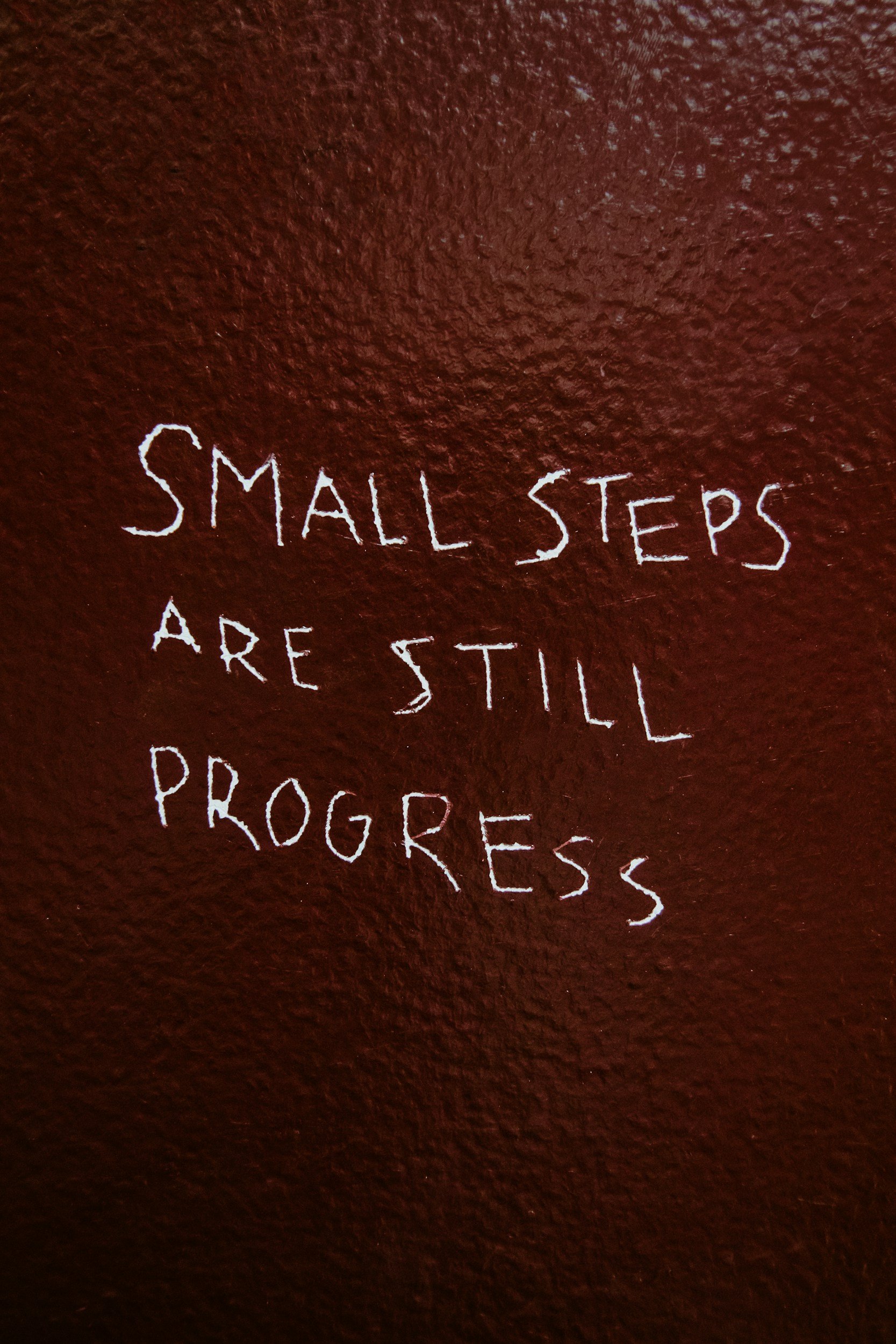
Moving forward does not require a dramatic overhaul. Large resets often backfire. Fad diets, rigid routines, ambitious overhauls — they are usually short-lived. Sustainable change tends to be incremental.
Calibrated starting is the skill of reducing the friction of beginning just enough to move.
Starting is often the hardest point. Making the first step smaller makes movement possible.
This might mean:
Drafting an outline instead of launching the full project
Scheduling one informational conversation instead of committing to a full career shift
Completing one small administrative task rather than reorganizing your entire system
Planning a reflection session before forcing a decision
Calibrated starting respects both your ambition and your current capacity. It shifts the focus from completion to momentum.
For many driven adults, the barrier is not motivation. It is scale. The imagined version of “starting” is too large. Shrinking it makes movement possible.
When waiting to feel ready keeps you stuck
There is a common belief that clarity must precede action. That confidence should come first. That readiness should feel obvious.
In practice, readiness evolves incrementally.
Each step prepares you for the next.
I remember this vividly when training for my first 5K. I was active, but not “a runner.” A friend challenged me, and I committed. I found a gradual program — couch to 5K — and was shocked at how manageable it felt when broken into increments. By the time I finished the 5K, I wanted to train for a 10K. I was not ready for the 10K at the start. I became ready by progressing.
Confidence grows through exposure. Clarity develops through iteration. Energy builds through engagement.
If you are waiting to feel entirely certain before you begin, you may be waiting indefinitely.
How working with a therapist in Wakefield can help you move forward
When stuckness persists, stepping outside your internal loop can be helpful.
Working with a therapist in Wakefield provides space to examine what is blocking movement without judgment. Therapy is not about pushing you harder. It is about identifying the specific barriers interfering with action and developing a strategy to release those brakes so motivation can function as intended.
In therapy, we might explore:
Whether fatigue is driving avoidance
Whether expectations need recalibration
Whether fear of failure or fear of change is operating quietly
How your temperament influences your approach to goals
What small, strategic shifts would create traction
Therapy is both reflective and practical. Insight matters, and so does implementation. Together, we identify patterns and experiment with concrete adjustments that support sustainable change.
For ambitious adults, this often means learning to work with yourself rather than against yourself.
Early spring as a thoughtful pivot point
Mid-March carries a unique energy. Winter is not fully gone, but the possibility of change is visible. The air shifts, even if the temperature does not cooperate.
This in-between season mirrors the psychological space you may find yourself in. Not entirely stuck. Not fully moving. Aware that something new is possible, but unsure how to begin.
You do not need dramatic reinvention. You need clarity about what is blocking you and a realistic starting point.
When barriers are reduced, motivation is often waiting on the other side.
Closing
If you are ready for change but unsure where to start, it may not be a motivation problem. It may be a calibration problem.
Understanding what is making action feel costly or risky is the first step. Movement becomes easier when expectations align with capacity and when fear is acknowledged rather than ignored.
If you would like support identifying those barriers and building a realistic starting point, working with a therapist in Wakefield can help you move forward with clarity and steadiness.

Michelle Butman Collins, LICSW - Therapist in Wakefield, MA
Michelle Butman Collins, LICSW, is a therapist in Wakefield, MA, who helps young adults and adults feeling overwhelmed, anxious, or stuck find more fulfillment and ease in their lives. She offers both in-person and online therapy in Massachusetts, Connecticut, and Vermont, with a personalized approach that helps clients understand themselves and make meaningful changes